A successful Arbitrum withdrawal transaction does not prove the Ethereum claim was submitted. Check bridge history, the claim, and the L1 token record.
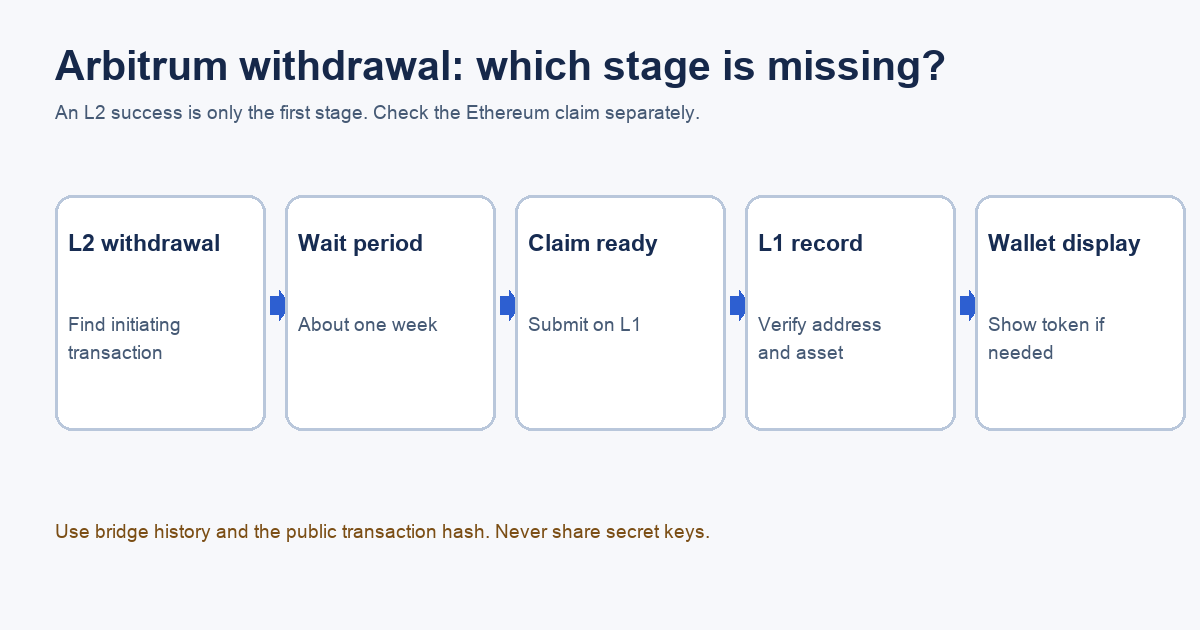
Someone asked where their ETH went after an Arbitrum-to-Ethereum transfer had shown success for ten days. The missing clue was a second action: the Arbitrum withdrawal must be claimed on Ethereum after the waiting period. The original Arbitrum transaction only starts the exit. The user reported receiving the funds after making the claim.
That story is useful, but it does not cover every missing balance. A later MOON holder's question showed all bridge stages green, including the claim, yet the token was still absent from the wallet display. These are different branches.
Has the withdrawal become claimable?
On the official Arbitrum Bridge, open your profile's Transactions tab and find the withdrawal. For Arbitrum One or Nova to Ethereum, the official bridge has a roughly one-week waiting period; the exact time can vary. When the countdown finishes and Claim is available, submit that Ethereum-side transaction with your wallet and verify that it completes. Merely seeing Success on the Arbitrum transaction does not complete this step. Keep enough ETH on Ethereum for the claim transaction cost, and read the wallet prompt before signing.
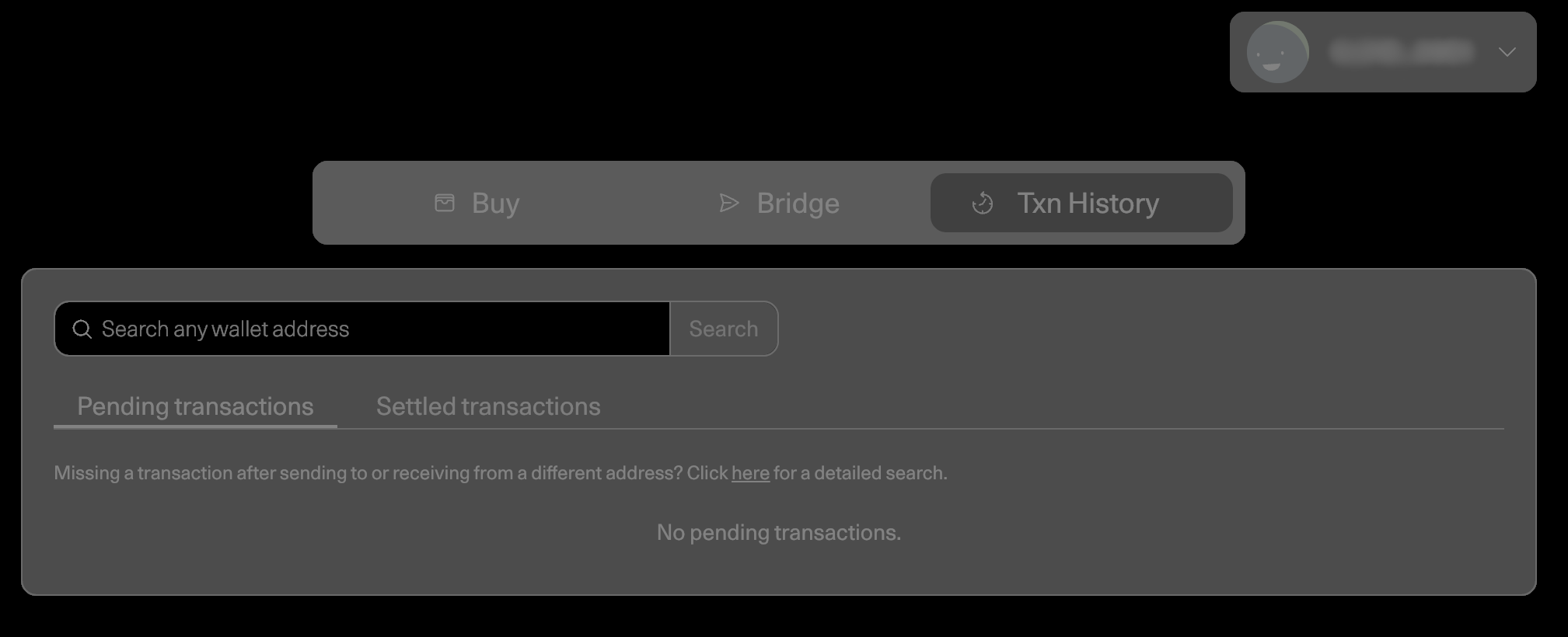
If the withdrawal is absent from your connected wallet's history, use Arbitrum's bridge transaction history and search the Arbitrum-side transaction hash that initiated the withdrawal. This matters particularly for smart-contract wallets: Arbitrum says a withdrawal might not appear in the ordinary history unless you control that address on Ethereum. Do not start a second withdrawal simply because a dashboard is empty.
What if the bridge says Claimed but the wallet still shows zero?
Now check the Ethereum-side result, rather than pressing another claim or trusting the wallet balance alone. In the bridge history, identify the Ethereum transaction and inspect it on an Ethereum block explorer. Compare the destination address and asset with the wallet you are viewing. If the Ethereum transaction is confirmed and the asset is a token, the wallet may need to display the correct token contract on Ethereum; see our MetaMask missing-token checks. If the explorer does not show the expected asset at your address, a display setting is not the answer. Take the public transaction hashes and exact bridge status to Arbitrum's official troubleshooting guide or support. Never share a recovery phrase.
The useful distinction is withdrawal initiated → waiting → claimable → claim submitted → Ethereum record → wallet display. Find the first stage that lacks evidence before taking action.
Official sources
Product interfaces and recovery policies can change. Confirm the current steps before acting.