A MetaMask extension bug falsely warned of insufficient funds when network selections differed. Check the affected version, update, and verify actual gas.
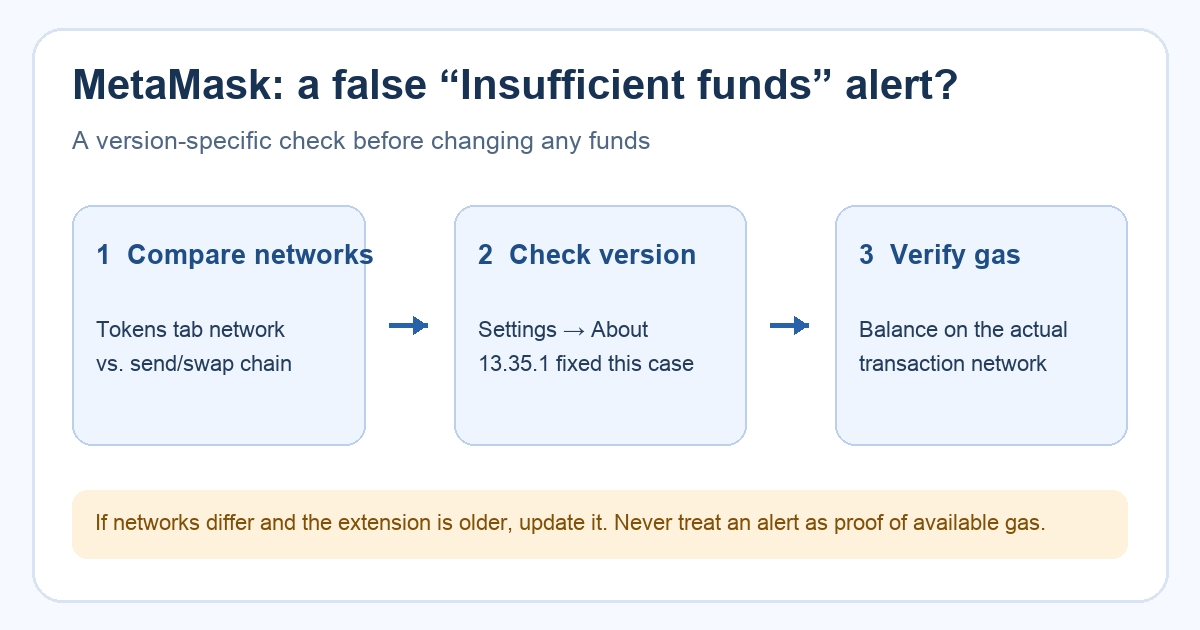
A MetaMask extension user reported an “Insufficient funds” alert during a dapp swap even though the apparent balance was enough. The clue was oddly specific: the alert appeared when the network selected in MetaMask’s Tokens tab differed from the network of the transaction, then disappeared when those selections matched. The reporter also saw it in MetaMask’s own send flow. For extension versions 13.34.1 and 13.35.0, this was a confirmed false alert; MetaMask says it fixed the bug in 13.35.1. Check the actual transaction network and your extension version before deciding that funds are missing. This does not mean every insufficient-funds warning is false.
Is this the same false alert?
Look at the chain named in the pending send or swap, then look at the network selected in MetaMask’s Tokens tab. In the original bug report, the warning depended on a mismatch between those two selections. Choosing the transaction’s network in the Tokens tab or All Popular networks made the alert disappear in the affected build. That is a diagnostic clue, not a reason to sign a transaction or a guarantee that the real network fee is covered.
The original report was for the Chrome extension on macOS, with version 13.34.1; a MetaMask contributor reproduced it on 13.35.0. The reporter then confirmed the fix in 13.35.1, and MetaMask’s 13.35.1 release notes explicitly mention false insufficient-funds alerts when the Network Manager selection differs from the transaction chain. The issue does not establish the same cause on mobile or every later build.
Update the extension, then check the alert again
MetaMask says to find your installed version under Settings → About. If it is older than 13.35.1, follow MetaMask’s current update guide: fully restart the browser so the official extension-store update can arrive. A single closed tab or a sleeping laptop is not a full browser restart. After updating, reopen the send or swap preview and see whether the alert still appears.
If an automatic update does not arrive, MetaMask also documents a manual extension update. Its Chrome extension-settings example shows the Update button when Developer mode is temporarily enabled:
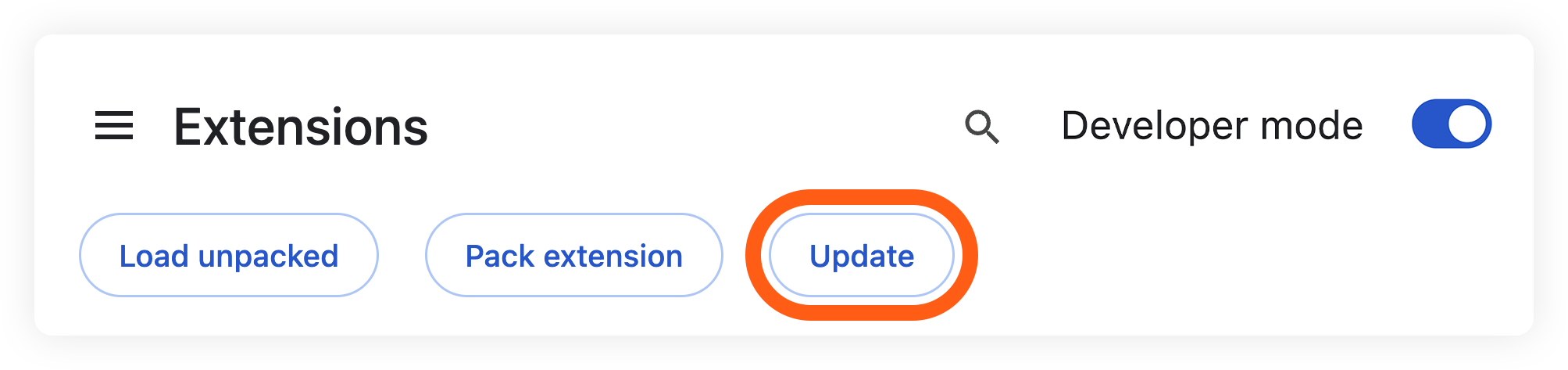
Screenshot from MetaMask’s update guide, reviewed November 9, 2026. MetaMask instructs users to turn Developer mode off immediately after updating.
The guide warns that Developer mode relaxes browser protections. Use it only if needed for the update, turn it off afterward, and avoid unofficial downloads. Do not uninstall a manually installed wallet just to troubleshoot this alert: MetaMask’s guide says reinstalling requires a secure backup of your Secret Recovery Phrase. Never enter that phrase into a webpage or send it to anyone.
If “Insufficient funds” remains on a current version
Treat the warning as potentially real. Check the native gas token on the transaction’s chain, not just the total portfolio balance or the same token on another chain. MetaMask’s current insufficient-funds guide explains that a genuine transaction can require a network fee, with network-specific payment options. Verify the amount and network in the confirmation before any signature; do not send additional funds merely because an old screenshot resembles this bug.
If the chain and gas balance are correct yet the alert persists after updating, use MetaMask’s official support route with the extension version, browser, transaction chain, and exact error wording. Do not share a recovery phrase, private key or signing request. The 13.35.1 fix is evidence for the specific network-selection regression, not a diagnosis of every failed transaction.
Official sources
Product interfaces and recovery policies can change. Confirm the current steps before acting.