Use the transaction hash to identify the actual chain, then check whether your Safe exists there and whether same-address deployment is supported.
Start with the transfer, not the wallet display
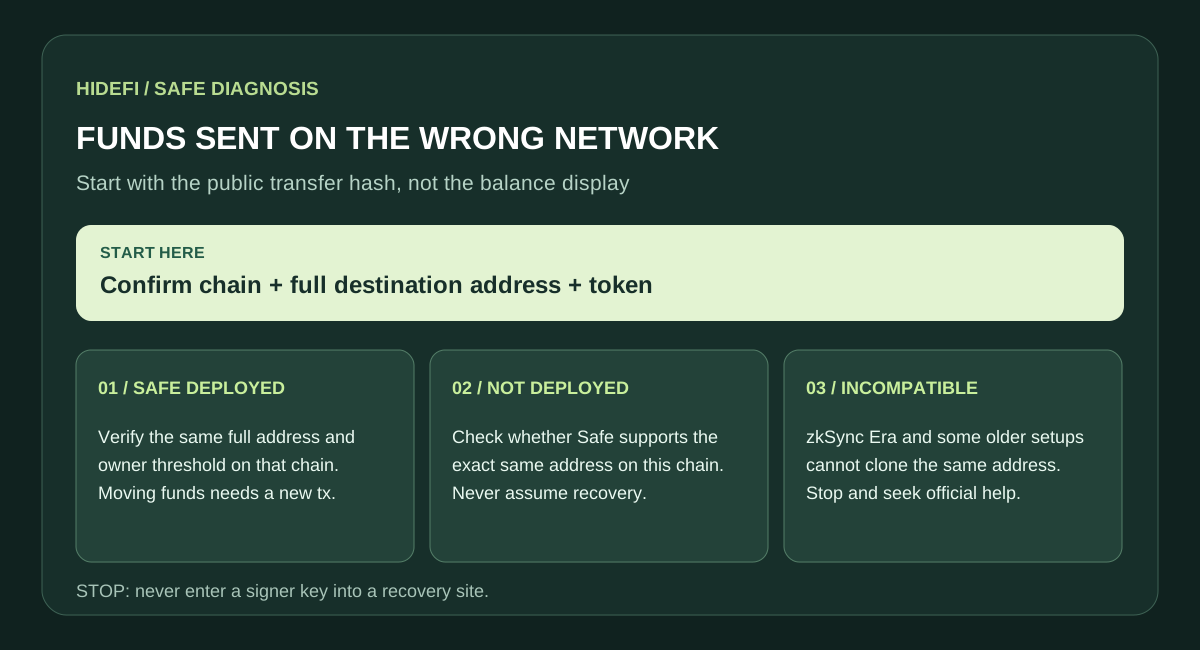
A Safe address can look identical on more than one EVM network, but the assets remain on the chain where the transfer actually settled. Open the public transaction hash in the explorer for the network used by the sender. Record the network, full destination address, token contract (if applicable), and confirmation status. Compare the full destination address with your Safe address; a similar prefix or suffix is not enough. A zero balance in the Safe interface alone does not tell you whether the transaction went to another network or another address.
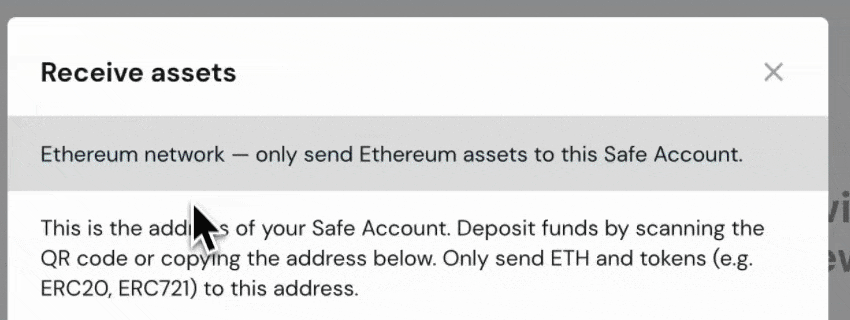
Safe's receiving guide says to deploy the Safe on the network where assets will be received. The following checks help identify what happened; they do not guarantee recovery.
The Safe is already deployed at that address on the transfer chain
Open the official Safe{Wallet} app on the actual transfer chain and verify the same full Safe address. Compare its current owners and confirmation threshold with the signers you control. If the asset is present there, any outgoing transfer is a new on-chain transaction requiring the Safe's normal approvals and network fees. Do not sign a transaction until its destination, token, and amount are independently verified. Changing the network selector does not bridge the assets to your originally intended chain.
The address has assets, but the Safe is not deployed there
Do not assume that pasting the address into Safe or deploying a new Safe will give you control. Check Safe's multi-chain deployment guidance for whether this particular Safe, contract version, and target network can be deployed at the exact same address. The added account may inherit the original owners and threshold rather than changes made later on another chain. Verify those signers before spending any deployment fee or sending more assets.
If the normal Safe interface does not support the match, stop. Safe publishes a technical Recovery Safe deployment guide, but it states that recovery is not always possible and depends on the original deployment data and matching contracts on the target chain. It is an advanced procedure involving a deployer key, not a generic “import your seed phrase” fix. Use official Safe support or a qualified professional for a high-value case; never type a private key into a recovery website.
The network or address is incompatible
Safe explicitly says its same-address multi-chain feature does not work with zkSync Era and lists other version and network combinations that cannot be cloned. Sending to an address on a chain where the matching Safe cannot exist may leave assets inaccessible. The same applies if the explorer shows an unrelated contract at that address or the destination address does not match your Safe. Do not pay someone who promises guaranteed retrieval or asks for signer keys.
Your next safe action
Save the public transfer hash, chain name, full destination address, token contract, and Safe creation transaction if known. Use those facts when consulting Safe's official documentation or support. Do not send another deposit, sign a “verification” transaction, or bridge funds until you have established who controls the address on the chain that actually received the assets. If the mistake happened during account creation rather than a transfer, use our wrong-network creation guide.
Official sources
Product interfaces and recovery policies can change. Confirm the current steps before acting.